Basic introduction to tomographic reconstruction
Goals:
The ultimate aim is to perform a good tomographic reconstruction from the two crossed cameras. However, firstly the most basic methods will be introduced to you (Back-filtering, Algebraic Reconstruction Technique, Abel transformation ) and later even the state of art methods that are used for reconstruction in large tokamaks.
Moreover, during this task you will have a chance to develop or improve algorithms to remove reflections from chamber (currently based on PCA), detect and correct slight shifts in cameras position and reach perfect synchronization of both cameras and the rest of tokamak diagnostics.
Some alpha versions of the scripts are already prepared but you should improve reliability/speed/accuracy algorithms for previously mentioned issues and if possible so rewrite them to Python. Moreover, you can try to add the results as a standard GOLEM diagnostics.
In this task you can reach very interesting results and no previous knowledge of the mathematical algorithms is needed. Moreover, this task is very variable so the level can be setup according to your knowledge and abilities.
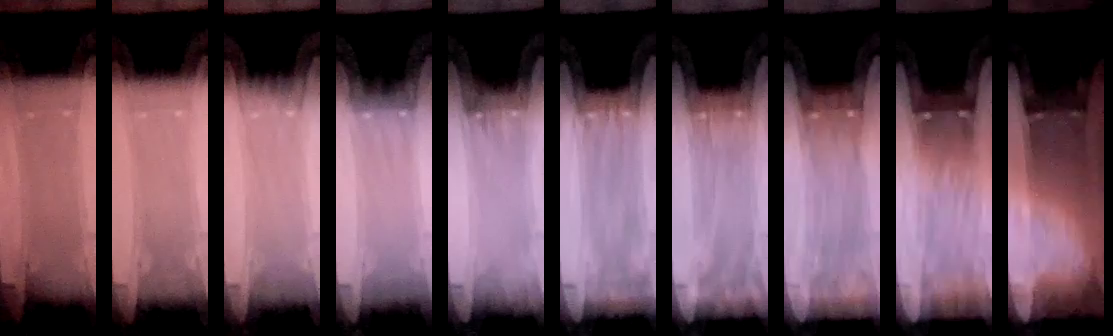
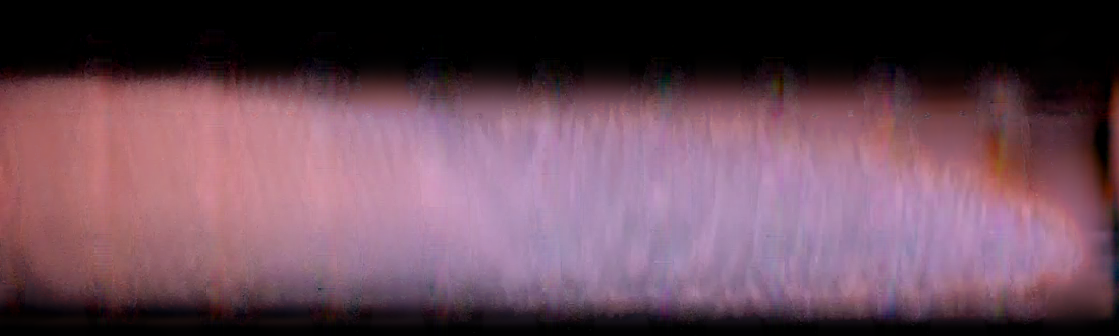
Mov 1: An example of tomographic reconstruction. The results is not very reliable because only one camera was used
Equipment:
Two fast cameras CASIO EXF1, photodiode
Requested knowledge:
Programming:
Basic knowledge of Python or Matlab.
Plasma physic:
None
Mathematics:
Fast Fourier transformation
Recommended literature:
A brief description of the used cameras
Other links on wikipedia in the text
Supervisor:
Michal Odstrčil - odstrmic@fjfi.cvut.cz